Explore our Blog for
Latest News & Insights
Stay updated with the latest updates and new products. Discover what's happening around the io.net.

Io Intelligence 2
Akash Network launched in 2020 as the "Airbnb for cloud compute”. In doing so, it pioneered the DePIN movement with a decentralized marketplace for spare CPU and storage capacity. Fast forward to 2026. Akash now offers GPU support that enables it to compete in the exploding AI infrastructure market. But Akash’s CPU-first architecture and container-focused approach creates some fundamental limitations, especially for startups running large-scale AI training and inference. io.net was purpose-bu
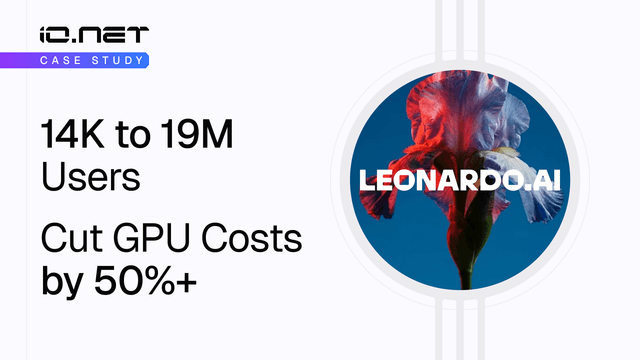
See how Leonardo.Ai scaled from 14K to 19M users and cut GPU costs by over 50% using io.net's high-performance, affordable compute solution for generative AI.

If you’re currently scaling your AI product, you’ve probably noticed something rather unsettling: your infrastructure bill is growing faster than your product. Many startup teams are experiencing compute costs that consume 50-60% of their entire operating budget. That’s more than salaries for engineering, customer acquisition, and other team roles combined. Let’s be clear: the economics of AI budgets are now, in an ironic feedback loop, threatening the stability of the entire AI sector. Don’t
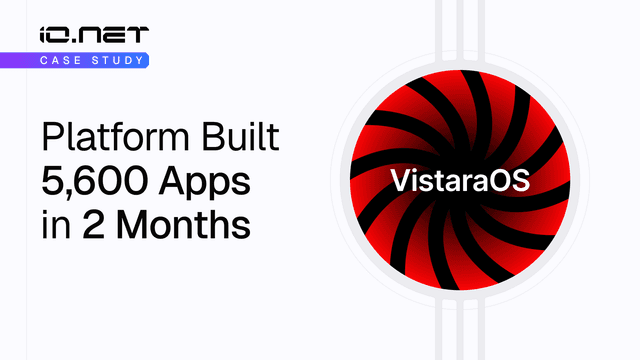
Vistara Labs used io.net to scale its Zaara AI platform, building 5,600 apps in two months while cutting compute costs by 3x and achieving zero infrastructure failures.
Gensyn is well-known as the GPU solution for "research-first" and "protocol-first" AI developers. Built atop a custom Ethereum rollup, Gensyn is pioneering something genuinely novel: a fully decentralized, trustless network for machine learning computation, where workloads are verified and coordinated across any device on the planet. By any device, it could be consumer laptops, enterprise data center GPUs, gaming hardware, or even a Mac Mini with Apple Silicon chips (M1, M2, and M3), all without
Render Network has built a compelling reputation as the GPU solution for "creative-first" and "research-first" developers. With a decentralized marketplace for GPU compute, native support for Blender and Cinema 4D, and an expanding AI inference layer through its Dispersed subnet, Render Network is a strong fit for 3D artists, VFX studios, and AI/ML teams looking for cost-effective alternatives to centralized cloud providers. Render Network does this all without managing any raw compute infrastru
Over the recent months we have seen both AI providers and hyperscalers go offline for several hours. Production workflows stalled almost immediately. Customer service bots went dark, code pipelines froze, and engineering teams struggled to come up with emergency plans most of them hadn’t prepared for. Every time there is an outage with a compute provider or massive AI company, there is an important question that isn’t answered when the service comes back online: if these providers can't guara
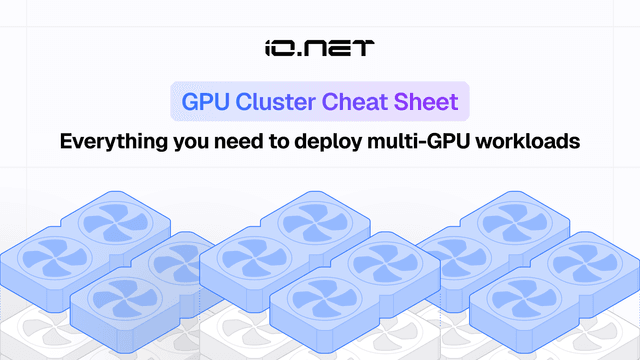
Most developers don't fail at distributed GPU training because they select the wrong model architecture. On the contrary, they misstep when provisioning the wrong cluster and GPU mix, wrong interconnect topology, and wrong scaling strategy. To add insult to injury, they’ll burn $4,000 in three hours trying to figure what the heck went wrong. This quick guide exists so you can avoid this mess. When we published a GPU cluster quick-reference card on X earlier this quarter, it became one of our
18 production-ready AI agents for NLP, market data, & automation on io.intelligence. Consolidate your AI stack with one API.
Together AI is known for its reputation as the GPU solution for "research-first" developers. Featuring polished, serverless inference APIs and managed fine-tuning pipelines, Together AI is a good fit for AI/ML teams transitioning from open-source models to production endpoints, all without managing raw infrastructure. Whereas legacy hyperscalers focus on general-purpose compute and boutique clouds serve academics with SSH-and-go simplicity, Together AI is aimed at the technical mid-market. It h

Does this sound familiar? A new Web3 network launches. It issues tokens to attract early contributors. People pile in. The token price climbs. The project looks healthy. Then the market turns. Token price drops. Contributors turn away. And the network shrinks. Fewer contributors also means less utility, which means less demand, which means the price drops more. And this same pattern continues, until there's not much left beside a whitepaper and some ghost validators. io.net’s new tokenomics i

AI Is running in the dark. It's time to turn on the lights. Let’s say you have a truly innovative idea and the team to launch the next great AI project. But, when you sit down to get started you immediately hit a wall. The compute you need is controlled by a handful of hyperscalers. They limit access, set prices that are opaque and unaffordable, and force you into enterprise contracts designed for companies ten times your size. The decisions that are affecting the infra you need to succeed are