Explore our Blog for
Latest News & Insights
Stay updated with the latest updates and new products. Discover what's happening around the io.net.

io.net blog
Latest
See All
The big AI access question isn't which model you can use, but rather whether. you can get the compute to build, fine-tune, or run anything at all. As AI infrastructure investment climbs toward what many analysts describe as tens of trillions of dollars in projected spending over the coming decades, the infrastructure beneath that spending is consolidating rapidly into a small number of hyperscale build-outs serving a small number of well-capitalized buyers. The result is a structural access gap
Ask anyone about how to solve AI compute scarcity and they’re likely to lean into a default answer: build more data centers. More campuses with a ton of gigawatts fueled by dedicated power substations. But in 2026, that answer is running headlong into a wall of physical and financial problems that simply weren’t very visible a couple of years ago. Grid interconnection queues now stretch 5–10 years in many regions across the US. For those AI data center projects in the pre-grid phase, diesel
The financialization of GPU infrastructure is quietly reshaping who controls AI compute access. As datacenter operators and neoclouds use GPU fleets as loan collateral to finance billion-dollar buildouts, capacity allocation is starting to follow debt-service logic rather than market demand. The result is that access concentrates around well-capitalized incumbents while startups and independent researchers face a compute market where the best bid doesn't always win the capacity. Distributed supp
The most important AI infrastructure decision in 2026 is not which model scores highest on MMLU. It is whether the model you deploy creates a new dependency on a vendor, a pricing tier, or a compute layer that trades one form of lock-in for another. The open-vs-closed line has shifted enough over the past 18 months that the old framing ("open models are catching up to closed ones") no longer captures what's actually happening. For many workloads, open-weight models from Llama, DeepSeek, Z.ai,
We’re told that AI's compute crisis is a supply problem. That is, simply not enough GPUs exist. AWS is reportedly planning millions more chips, NVIDIA is backing gigawatt-scale "AI factories," and analyst estimates suggest a capex supercycle unlike anything the industry has seen. While a global chip count shortage would seem to be the most likely suspect for AI workload constraints, the truth has a bit more layers. In fact, a significant fraction of existing GPU capacity actually sits idle.
AI's power problem has two very different answers, and the industry is currently sprinting toward only one of them. Understanding the distinction matters for anyone making GPU sourcing decisions in 2026, because the math on each path looks very different depending on where you stand. The dominant industry response to AI's energy demand is new-build in the form of gigawatt-scale campuses, dedicated power infrastructure, long-term purchase agreements. That approach adds supply by constructing it
The AI budget conversation is the hot topic this year. So, it’s safe to say that If you've probably heard some version of this line: token costs are falling fast and AI is about to get a lot cheaper. It's a reasonable proposition. You want to believe it. But according to Gartner's own research, it’s a notion that is mostly wrong for the people actually paying the bills. Gartner's forecast, published this spring, makes some other striking proclamations. By 2030, they believe that running infer
Let’s imagine that you’ve budgeted $10,000 for an AI/LLM training run. You hop on AWS and the app says, “no H100s available for 72 hours”. Apart from some stress and frustration, what does that delay actually cost your team? In answering that question, perhaps like Thanos, when asked by Dr. Strange how much it cost to collect the infinity rings, he replied: “Everything”. All joking aside, most finance models would record “zero”. There’s no invoice because you’ve consumed no GPU-hours. Your $10
When you ask an AI to help with something and it refuses, that refusal didn't happen by accident. Someone, or more precisely, a team of researchers, lawyers, and ethicists at a major AI lab, made a deliberate choice to build that boundary into the model. Today, major model providers (e.g. OpenAI, Anthropic, Google, Meta, Mistral, and Cohere) each maintain their own alignment teams, each with distinct values, risk tolerances, and commercial pressures shaping what their models will and won't do. T
Let’s imagine that you’ve budgeted $10,000 for an AI/LLM training run. You hop on AWS and the app says, “no H100s available for 72 hours”. Apart from some stress and frustration, what does that delay actually cost your team? In answering that question, perhaps like Thanos, when asked by Dr. Strange how much it cost to collect the infinity rings, he replied: “Everything”. All joking aside, most finance models would record “zero”. There’s no invoice because you’ve consumed no GPU-hours. Your $10
io.net is utilizing the Solana blockchain for instant GPU payments, smart contract automation, and secure, decentralized cloud computing transactions.
Learn what a GPU cluster is, how it differs from multi-GPU servers, and use our cost calculator to decide if you should build or rent one.
Your 2026 guide to building a purpose-built GPU cluster for AI. Includes TCO, vendor-agnostic benchmarks, hardware selection (H100/MI300X), and rollout plan.
Complete technical guide to decentralized compute: benchmarks, cost calculator, compliance checklist, and step-by-step migration from AWS/GCP.
Discover io.net's Incentive Dynamic Engine (IDE): an adaptive tokenomics model bringing sustainable economics and predictable stability to decentralized GPU compute.
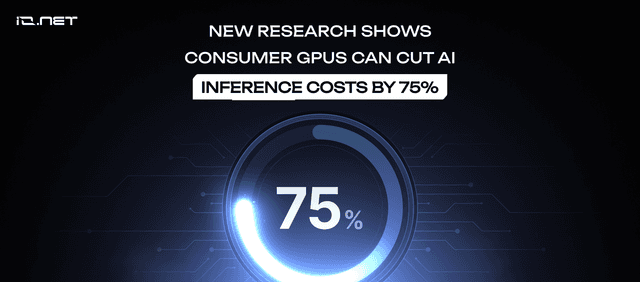
New io.net study shows consumer GPUs (RTX 4090) can cut AI inference costs by up to 75% for LLMs, enabling a sustainable, heterogeneous compute infrastructure.
Blockchain promised to solve centralization, but focused on wrong problems. DePIN networks like io.net finally deliver real value through affordable GPU access.
Latest By Topic (138)
See All
Distributed GPU networks are breaking Big Tech's ML infrastructure monopoly with 90% cheaper training, instant scaling, and democratized AI compute
Tired of 25-call limits killing your AI coding flow? Learn how io.net and Void Editor unlock truly autonomous development without artificial constraints.
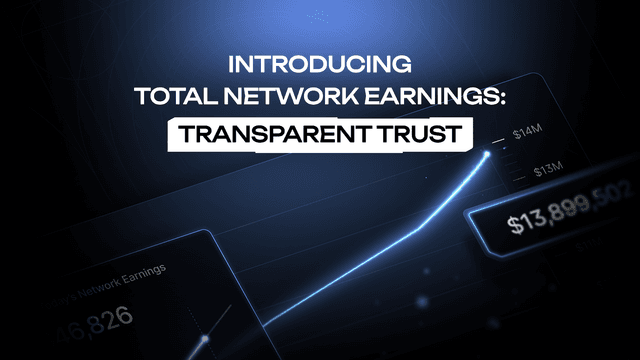
io.net launches Total Network Earnings (TNE) for complete transparency in AI infrastructure costs with real-time tracking, automated payments, and verifiable metrics.
io.net celebrates its first anniversary, showcasing growth to 10,000+ GPUs across 138 regions and $13M revenue while democratizing AI infrastructure access.
io.net enables privacy-first AI training through Flashback Labs' Stargazer model, using federated learning and TEEs to protect personal data during training.
Launch I/O is a 35-day hackathon where developers build autonomous AI agents using io.intelligence's unified toolkit, with $6,500 in prizes and ecosystem access.
Injective partners with io.net to revolutionize DeFAI development by combining AI-driven blockchain tools with decentralized GPU computing infrastructure.
Theoriq partners with io.net to power decentralized AI agent swarms on blockchain, reducing compute costs by 90% while scaling modular AI ecosystems.
io.net's developer tools provide simplified API integration and decentralized GPU access, reducing AI deployment costs by up to 90% compared to centralized providers.

Explore how decentralized computing networks are revolutionizing AI development by providing cheaper, faster, and more scalable alternatives to traditional cloud services.
A comprehensive guide to launching and managing virtual machines and containers on IO.net's decentralized GPU cloud platform for cost-effective computing.
A comprehensive guide to launching and managing virtual machines and containers on io.net's decentralized GPU cloud platform for cost-effective computing.